
The Sentence That Alarmed the Internet: What Anthropic's New Economist Actually Said
How a 2023 academic article about AI and human extinction got turned into a 2026 alarm headline, and what this says about the gap between research and the general public.

The public pushback
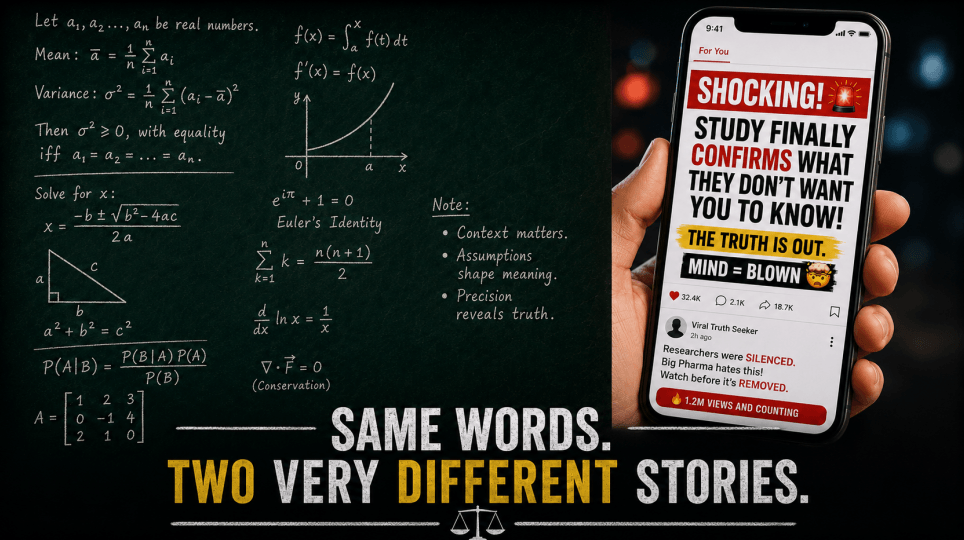
Last week (June 23rd, 2026) a sentence about human extinction went viral on the internet and many concluded it was evidence that Anthropic, one of the top AI companies that promotes itself as being concerned about AI safety, was again exposed as not being concerned about AI safety as they announced that a prominent Stanford economist Chad Jones would be joining their new research institute. Reporters familiar with his work found a line about a "one-in-three chance of ending human existence," from an article he wrote in 2023 and the internet went wild with push backs.
Many made statements along the lines of AI people thinking that a one-in-three chance at wiping out humanity was acceptable for a better world. On the social media platforms like X and Reddit, there were statements like "So bro thinks there's a 2/3 chance that AI will make billionaires want to spread their hoarded wealth so people can live healthy and happy?".
It's a great story. It's also almost the exact opposite of what Chad Jones actually argued.
I will review what was really said and how the lesson we can learn surprisingly has very little to do with AI.
So what really happened?
Jones, a well-respected Stanford professor in growth theory, took a leave of absence to join Anthropic's Institute research group to study how AI will reshape the economy. He announced it himself on his own X account:
Some news: As of June 30, I'll be on leave from Stanford at Anthropic. I'm joining the Anthropic Institute, where I'll continue my research on AI and our economic future and give seminars and talks as always. 1/3
— Chad Jones (@ChadJonesEcon) June 23, 2026
The "one-in-three extinction" sentence is not new, and it isn't something Anthropic said either. It was from a paper Jones published in 2023 and later in a peer-reviewed economics journal called The AI Dilemma: Growth versus Existential Risk. Anthropic hiring him is what is new. The quote itself is old, and it resurfaced after Jones's appointment to Anthropic became public.
So what was Jones talking about in his 2023 article?
The math joke that the general public did not get
As an economist, Jones took a standard formula and pushed it to its logical extreme to see the result.
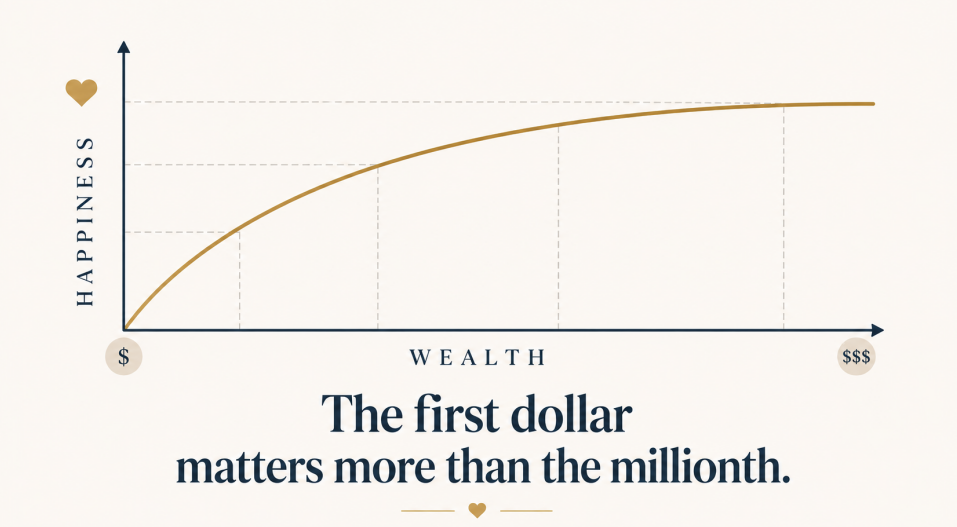
The formula involves a concept called utility which is how much real happiness we get from having more stuff. Most of us will agree that as we get more stuff, we start to experience diminishing returns. For example, when you eat the first slice of pizza at lunch time your face lights up with delight but as you eat more slices the pleasure of eating the pizza is less, especially if you ate too much. A specific version of this idea is what is known as log utility which assumes happiness rises with the percentage changes in income rather than absolute ones, so a 10% increase feels the same whether you earn $20,000 or $200,000. When Jones used the log utility inside a model of AI-driven growth, the math produced the now infamous result that it would be "optimal" to accept a one-in-three chance of ending human existence in exchange for a two-thirds chance of raising the standards of living by a factor of 55.
Jones did not stop here but that is where the headlines did. He went on to point out that this result was a red flag and a sign that the formula was broken. He has repeated this many times after that but the headlines conveniently were silent about this. During an official presentation on AI and Economic Growth hosted by the San Francisco Fed, September 2, 2025, his exact words were "It turns out with that standard model, you're willing to take a one in three chance of killing everyone on earth to get 10% growth. And that taught me, wow, I'm not log utility at all. Because there's no way I would take a one in three chance. So it surprises me that our standard model would say something like that."
This is a way of arguing a point in economics. It's the same logic behind the famous "The Equity Premium: A Puzzle" paper introduced in 1985 by economists Rajnish Mehra and Edward C. Prescott. So Jones fed the log utility real numbers, and watched it output something absurd, and concluded that the formula needed fixing. The entire point was to show that the everyday math economists use to value human life and growth falls apart, the moment it involves something like human extinction.
There were other academics who also shared this sentiment when the story became viral. It's surprising that a publication of the Financial Times's calibre missed the context.
Jones's actual conclusion
If you read past the viral sentence, Jones's real argument agrees with the alarm that everyone has been expressing.
In a companion paper on how much we should spend to reduce AI's existential risk, on page 2, he concludes that because even small catastrophic risks are intolerable, societies should be spending enormous sums to prevent them, at least 1% of GDP every year, and across many of his simulations, an average that climbs past 8% of GDP. That's spending that would match or exceed the defense budget for most countries. His point was not that extinction is an acceptable cost for progress, but that we are spending far too little to keep ourselves safe, and our standard tools fail at highlighting the real danger.
Why the wrong version won
Now let me hasten to point out that the alarm by many on social media is actually the right response under the circumstances. So no, this does not mean that the critics are paranoid and crazy, far from the truth. Putting human extinction into a spreadsheet feels cold, and reasonable people can object to the modeling of human extinction as part of any argument or discourse. There are also understandable suspicions over Jones' hiring by Anthropic, many question how independent any academic would be working for an AI lab, and about whether talks about "existential risk" could just be marketing. These are legitimate questions that should be explored.
The emotions behind the alarm are understandable; however, the accusation aimed at Jones is false. And it's important that we be honest about the facts and why a false version became viral.
To understand what Jones really meant, a reader first has to learn what utility and log utility are, and most people won't sit through that. So the false story reaches them first, because it fits the reality they already believe. The jargon does half the work for the cynics, to most people, an extinction cost-benefit analysis sounds sociopathic at face value, no explanation required full stop. And the ground was already prepared, many persons already believe AI companies care more about their money and control than the survival of the masses, so an out-of-context quote just confirmed what they already suspected.
The full explanation further in the paper never stood a chance against all of that.
The lesson we can learn
As I hinted in my title "...and what this says about the gap between research and the general public." The most important lesson for us to learn has nothing to do with our extinction odds and AI.
Researchers write for other researchers. They share a set of unspoken premises, and inside that "bubble" a sentence like "with log utility, X is optimal" reads, to another researcher, as "look how broken log utility is." But research doesn't stay in the "bubble". It's easily accessible by others who don't use or understand the unspoken premises of economists. And when it goes public, the deeper meaning gets lost in the noise.
The solution is not to avoid the uncomfortable topics, if we are to expect things to get better. Economists must remember that their discourses will reach the public and therefore must speak clearly in ways the public can understand. An unreadable footnote cannot defend itself, but a simple, direct sentence can. As a novice to economics, I had to spend many hours and maybe a day or two to understand enough about what the article was saying, many persons would not bother to make that effort.
Because the alternative is exactly what we experienced going viral, the panic further eroding the little trust left, and the very real chance that policy gets written in response to a headline that was never true.

References
- Chad Jones's own announcement (X / Twitter)
- Financial Times, "Anthropic has hired an economist with … interesting views on human survival"
- Charles I. Jones, The AI Dilemma: Growth versus Existential Risk (Stanford; AER: Insights, 2024)
- Charles I. Jones, How Much Should We Spend to Reduce A.I.'s Existential Risk? (NBER working paper)
- Rajnish Mehra, Edward C. Prescott "The Equity Premium: A Puzzle"